Wednesday, 12 June 2019

World Cup Noodle

What is Japan's most essential export to the world? The Sony Walkman? Nintendo? Toyota cars? Sushi? Or maybe - just maybe - the Pot Noodle? Instant ramen feeds around 100 million people daily, including me and Hannah for several years at university, but I never gave much thought to where it came from. Turns out it came from the mind of one man, Momofuku Ando, who has his own museum in Yokohama to tell you all about it.

It's a very pleasing museum for men of a certain age. Momofuku was 48 when he invented instant ramen noodles, and 61 when he came up with cup noodles (after a trip to the USA made him realise that Americans are too lazy to find a bowl to put their noodles in). So my best years are ahead of me! Especially if I eat more cup noodles.

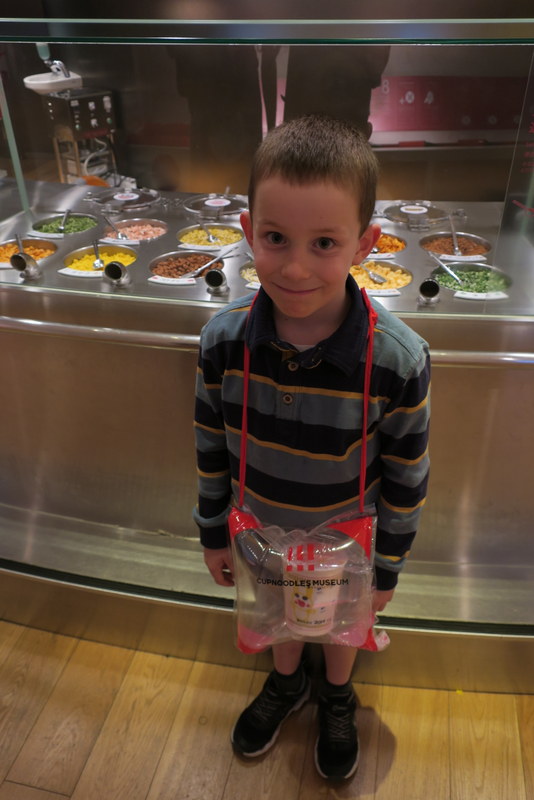
The museum allows you to design your own noodle pot and then choose the flavours to put in, as well as running through Momofuku's design process, which included two years of trial and error before finding that he should fry then dry. Then there was the problem of neatly dropping noodles into cups, which he solved by dropping the cups onto the noodles! He was still going at 95 when he designed instant noodles for space. Not bad.

As with all the most specialised museums, I left with a new appreciation for an unregarded niche of life. Next time I pour boiling water onto the dried contents of a cup, I'll spend the two minutes of reconstitution reflecting on the man who made it happen and the millions of others doing just the same as me at that very second. Arigato, Mr Momofuku.


Who needs natural history or fine art when you have cup noodles?


Yum!


The first ever instant ramen noodles!


It led to many more.


Then...the Cup Noodle!


Appreciation.


Seems like Glasgow is responsible for all the pot noodle consumption in the UK. Sounds about right.


Where Mr Momofuku did his magic.


Pete colours a cup.


Choosing flavours. I think he settled on chicken-bacon-egg-shrimp. A true taste innovator.


Happiness in a cup.

Run for the hills!

After the sizeable hustle and not inconsiderable bustle of the metropolis, we decided to take a couple of days and see the real Japan. And by real, I mean a very touristy spot in the mountains just west of the city. Most importantly, this gave us a chance to travel on the shinkansen, or bullet train.

Although Britain invented the train (and everything else) it's the Japanese who have perfected it, with these sleek aerodynamic conveyances connecting the country at blistering speeds. Inside is roomy and spotless, and that's just the masses traveling in "unreserved" carriages. You can upgrade to Green Cars and even Gran Class, but no matter how you go the only problem is how quickly it's over; in a blink we were alighting at Odawara on our way to Hakone.

From there our final destination was Gora, and this involved a switch to a train that was less of a bullet and more of a snail as it climbed up the mountains. At various stations the train reverses direction so as to zig-zag into the trees and thinning air, along the second steepest railway in the world, the recorded historical announcer told us. What amazed me was how many people were commuting, plenty of locals among us sightseers, and all our train travel has shown me how things in Japan - even public transit! - are designed to relieve human stress, whereas our Anglo-Saxon culture seems to exist with the opposite intention. Thank goodness I'm a Celt.

Talking of relaxing, Hannah had booked us into a hotel with our own hot spring in the room, a big stone tub on a balcony, accessed through the shower. We also got traditional yukata robes to wear around in an attempt to blend in, and a Japanese breakfast. Unfortunately Mt Fuji, away on the horizon, was shrouded in mist as it usually is, but with city sounds replaced by rustling leaves and running springs it was all wonderfully calming. I may have finally recovered from visiting the Pokemon Cafe.


Trains: keeping Tokyo moving.


That's our one there.


Pulling in.


All aboard!


Whisked away at 200mph.


Changing to something a little slower as the incline increases.


One of the switchbacks/track changes. Even the smallest station had a staff of two or three.


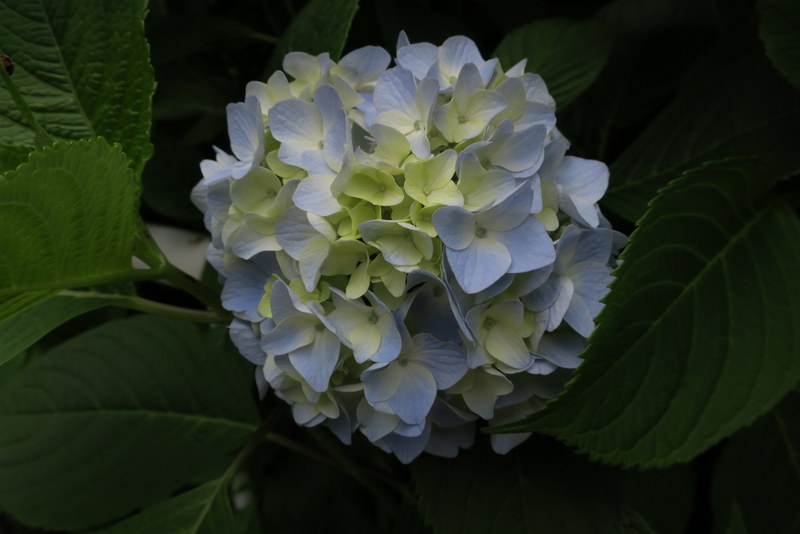
This area is famous for its hydrangeas. The higher up the mountains, the later they flower.


Just what you want to see when you arrive.


Lunch.


Walking around the beautiful Gora public gardens.


Photo credit: Pete.


Hothouse flowers.


Clearing head and lungs.


In the hotel.


The greatest invention ever! Socks you can comfortably wear with sandals!! I knew Japan was technologically advanced, but I never suspected something so revolutionary.


Pete catches up on Japanese kids' TV. Does he understand it? Does he care?


Our own private onsen. Well, private until I put this pic on the Internet.


Pete's major love in Japan, apart from Pikachu, is toilet-going. We've had to put a ban on his bathroom habits due to the amount of time he spends in there. He also admitted that he didn't realise the multiple water sprays were for cleaning yourself, he thought they were there "because it feels nice".


On a funicular the next day. Only the crazy Europeans (i.e. Hannah) would hike an extra 200m up a mountain to take another railway down.


Back on the bullet train with a bento.


Hmm. But thankfully nothing to do with us.

Monday, 10 June 2019

Tokyo drift

Like all big cities, Tokyo has so much going on! It's all a bit overwhelming for a boy who grew up in rural Somerset. I mean, Frome did have its annual Cheese Show, but this place is something else.

We thought it might be a good idea just to wander, although "wandering" really entails getting swept along to wherever the 9.3 million inhabitants are going at the time. We started big with the "World's Busiest Pedestrian Crossing" in Shibuya, where all the traffic stops and a few thousand people cross the street at the same time (the irony being that 90% of those crossing are tourists).

From there we popped in on Meiji Jingu, a large Shinto shrine dedicated to Emperor Meiji and Empress Shoken in a giant park. The Shinto religion has got the whole trinket game solved, with gift shops selling various charms and votive plaques on which to write your prayers. Every small ceremonial action, from tipping water to sprinkling incense, has a box for you to drop a coin in. It's less effort than Anglican cake sales, that's for sure.

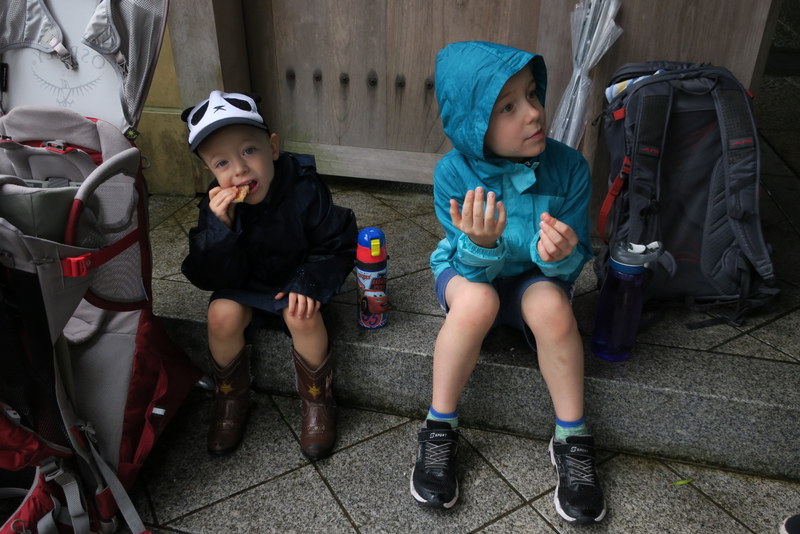
The next day it was raining, so we decided to...see some more shrines! This time we took 3-yr-old Oscar, who was not completely impressed with the situation, and monsoon rains which have been notably light for the past two years reappeared with a vengeance. After a long day of drizzle, we were looking at a giant Buddha when the heavens fully opened and we decided to call it a day. The rain rains on the just and the unjust, after all.


Why did the tourists cross the road?


 To get to the Japanese arcade!


Some professionals.


Some amateurs.


Crossing the bridge to the temple.


Sacks of sake. The Emperor was big on trade and food, so there are some barrels of Burgundy wine opposite this display.


Approaching the temple gate.


Pete's holding tourist info in Japanese, which he claims are prayers that he's going to use to command us. So a healthy view of religion there.


Tokyo central station, mixing the old and the new.
 

Quick snack before heading into a bamboo forest the next day.


Feeling pretty Zen right now.


Another opportunity to offer coins.


In the forest! Hannah's highlight.


Enjoying some Japanese barbecue for lunch. It's Pete's favourite in Houston, so why not try the genuine article? (It was very similar to home, just a lot cleaner).


Heading up to a Buddha.


Yep! Big.


And you could go inside it! Ever wondered what the inside of a Buddha looks like? Here's your answer.


The menu at our sushi restaurant that night. What to choose...?